The historical visit of President Washington to Cole family #usa1731
As we celebrate Presidents Day tomorrow, we remember the historic visit of the Commander-in-chief to Providence, RI.
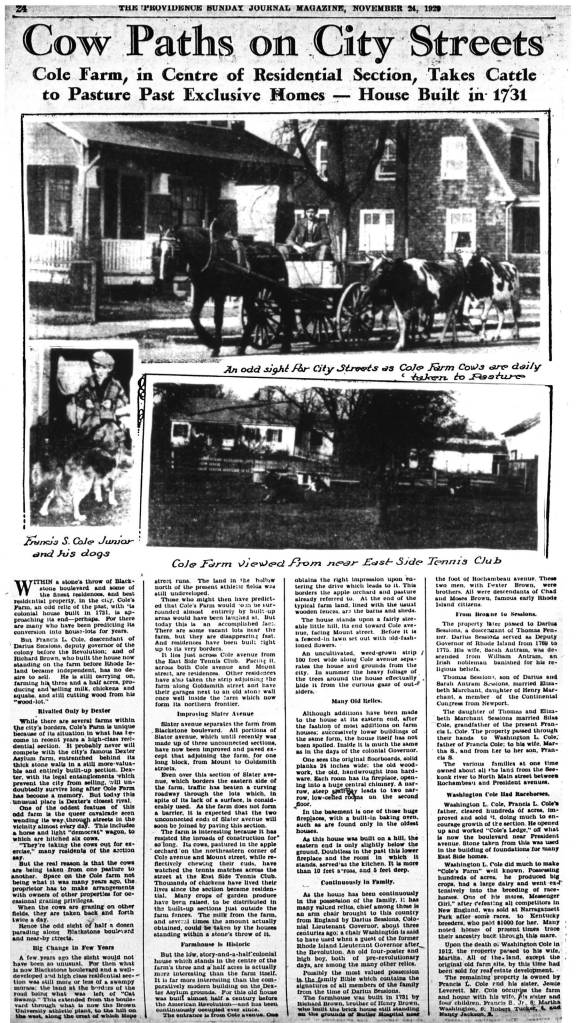
Here’s is a snippet from: http://sites.rootsweb.com/~rigenweb/articles/170.html “The Cole home has been preserved in as nearly as possible the form in which it was when early members of the Cole family entertained Washington and Lafayette, and contains among other relics of that day the chair in which the commander-in-chief sat.“
THE PROVIDENCE SUNDAY JOURNAL MAGAZINE, NOVEMBER 24, 1929
Cole Farm, in Centre of Residential Section, Takes Cattle to Pasture Past Exclusive Homes – House Built in 1731
Cow Paths on City Streets-THE PROVIDENCE SUNDAY JOURNAL MAGAZINE, NOVEMBER 24, 1929
WITHIN a stone’s throw of Blackstone boulevard and some of the finest residences, and best residential property, in the city, Cole’s Farm, an odd relic of the past, with its colonial house built in 1731, is approaching its end – perhaps. For there are many who have been predicting its conversion into house-lots for years.
But Francis L. Cole, descendant of Darius Sessions, deputy governor of the colony before the Revolution; and of Richard Brown, who built the house now standing on the farm before Rhode Island became independent, has no desire to sell. He is still carrying on, farming his three and a half acres, producing and selling milk, chickens and squabs, and still cutting wood from his “wood-lot.”
Rivalled Only by Dexter
While there are several farms within the city’s borders, Cole’s Farm is unique because of its situation in what has become in recent years a high-class residential section. It probably never will complete with the city’s famous Dexter Asylum farm, entrenched behind its thick stone walls in a still more valuable and entirely built-up section. Dexter, with its legal entanglements which prevent the city from selling, will undoubtedly survive long after Cole Farm has become a memory. But today this unusual place is Dexter’s closest rival.
One of the oddest features of this odd farm is the queer cavalcade seen wending its way through streets in the vicinity almost every day. This includes a horse and light “democrat” wagon, to which are hitched six cows.
“They’re taking the cows out for exercise,” many residents of the section say.
But the real reason is that the cows are being taken from one pasture to another. Space on the Cole farm not being what it was many years ago, the proprietor has to make arrangements with owners of other properties for occasional grazing privileges.
When the cows are grazing on other fields, they are taken back and forth twice a day.
Hence the odd sight of half a dozen parading along Blackstone boulevard and near-by streets.
Big Change in Few Years
A few years ago the sight would not have been so unusual. For then what is now Blackstone boulevard and a well-developed and high class residential section was still more or less of a swampy morass; the land at the borders of the road being what was left of “Cat Swamp.” This extended from the boulevard through what is now the Brown University athletic plant, to the hill on the west, along the crest of which Hope street runs. The Land in the hollow north of the present athletic fields was still undeveloped.
Those who might then have predicted that Cole’s Farm would soon be surrounded almost entirely by built-up areas would have been laughed at. But today this is an accomplished fact. There are some vacant lots near the farm, but they are disappearing fast. And residences have been built sight up to its very borders.
It lies just across Cole avenue from the East Side Tennis Club. Facing it, across both Cole avenue and Mount street, are residences. Other residences have also taken the strip adjoining the farm along Goldsmith street and have their garages next to an old stone wall once well inside the farm which now form its northern frontier.
Improving Slater Avenue
Slater avenue separates the farm from Blackstone boulevard. All portions of Slater avenue, which until recently was made up of three unconnected sections, have now been improved and paved except that adjoining the farm, for one long block, from Mount to Goldsmith streets.
Even over this section of Slater avenue, which borders the eastern side of the farm, traffic has beaten a curving roadway through the lots which, in spite of its lack of a surface, is considerably used. As the farm does not form a barrier, it is expected that the two unconnected ends of Slater avenue will soon be joined by paving this section.
The farm is interesting because it has resisted the inroads of construction for so long. Its cows, pastured in the apple orchard on the northeastern corner of Cole avenue and Mount street, while reflectively chewing their cuds, have watched the tennis matches across the street at the East Side Tennis Club. Thousands of chickens have lived their lives since the section became residential. Many crops of garden produce have been raised, to be distributed in the built-up sections just outside in the farm fences. The milk from the farm, and several times the amount actually obtained, could be taken by the houses standing within a stone’s throw of it.
Farmhouse is Historic
But the low, story-and-a-half colonial house which stands in the centre of the farm’s three and a half acres is actually more interesting than the farm itself. It is far more interesting than the comparatively modern building on the Dexter Asylum grounds. For this old house was built almost half a century before the American Revolution – and has been continuously occupied ever since.
The entrance is from Cole avenue. One obtains the right impression upon entering the drive which leads to it. This borders the apple orchard and pasture already referred to. At the end of the typical farm land, lined with the usual wooden fences, are the barns and sheds.
The house stands upon a fairly sizeable little hill, its end toward Cole avenue, facing Mount street. Before it is a fenced-in lawn set out with old-fashioned flowers.
An uncultivated, weed-grown strip 100 feet wide along Cole avenue separates the house and grounds from the city. In summer the heavy foliage of the trees around the house effectually hide it from the curious gaze of outsiders.
Many Old Relics.
Although additions have been made to the house at its eastern end, after the fashion of most additions on farm houses; successively lower buildings of the same form, the house itself has not been spoiled. Inside it is much the same as in the days of the colonial Governor.
One sees the original floorboards, solid planks 24 inches wide; the old woodwork, the old, handwrought iron hardware. Each room has its fireplace, opening into a huge central chimney. A narrow, steep stairway leads to two narrow, low-celled rooms on the second floor.
In the basement is one of those huge fireplaces, with a built-in baking oven, such as are found only in the oldest houses.
As this house was built on a hill, the eastern end is only slightly below the ground. Doubtless in the past this lower fireplace and the room in which it stands, served as the kitchen. It is more than 10 feet across, and 5 feet deep.
Continuously in Family.
As the house has been continuously in the possession of the family. It has many valued relics, chief among these is an arm chair brought to this country from England by Darius Sessions. Colonial Lieutenant Governor, about three centuries ago; a chair Washington is said to have used when a guest of the former Rhode Island Lieutenant Governor after the Revolution. An old four-poster and high boy, both of pre-revolutionary days, are among the many other relics.
Possibly the most valued possession is the family Bible which contains the signatures of all members of the family from the time of Darius Sessions.
The farmhouse was built in 1731 by Richard Brown, brother of Henry Brown, who built the brick house still standing on the grounds of Butler Hospital near the foot of Rochambeau avenue. These two men, with Dexter Brown, were brothers. All were descendants of Chad and Moses Brown, famous early Rhode Island citizens.
From Browne to Sessions.
The property later passed to Darius Sessions, a descendant of Thomas Fenner. Darius Sessions served as Deputy Governor of Rhode Island from 1769 to 1775. His wife, Sarah Antram, was descended from William Antram, an Irish nobleman banished for his religious beliefs.
Thomas Sessions, son of Darius and Sarah Antram Sessions, married Elizabeth Marchant, daughter of Henry Marchant, a member of the Continental Congress from Newport.
The daughter of Thomas and Elizabeth Marchant Sessions married Silas Cole, grandfather of the present Francis L. Cole. The property passed through their hands to Washington L. Cole, father of Francis Cole; to his wife, Martha S., and from her to her son, Francis S.
The various families at one time owned about all the land from the Seekonk river to North Main street between Rochambeau and President avenues.
Washington Cole Had Racehorses.
Washington L. Cole, Francis L. Cole’s father, cleared hundreds of acres, improved and sold it, doing much to encourage growth of the section. He opened up and worked “Cole’s Ledge,” off what is now the boulevard near President avenue. Stone taken from this was used in the building of foundations for many East Side homes.
Washington L. Cole did much to make “Cole’s Farm” well known. Possessing hundreds of acres, he produced big crops, had a large dairy and went extensively into the breeding of racehorses. One of his mares, Messenger Girl,” after defeating all competitors in New England, was sold at Narragansett Park after some races, to Kentucky breeders, who paid $1000 for her. Many noted horses of present times trace their ancestry back through this mare.
Upon the death of Washington Cole in 1912, the property passed to his wife, Martha. All of the land, except the original old farm site, by this time had been sold for real estate development.
The remaining property is owned by Francis L. Cole and his sister, Jessie Leverett, Mr. Cole occupies the farm and house with his wife, his sister and four children. Francis S., Jr., 8; Martha Washington, 6; Robert Tucker, 4, and Nancy Jackson, 2.
If I could give Ronnie and his space 5 million stars, I would. He is a spectacular host with such an elegant, historic space. The space, while historic and special was also modern and well-appointed. It’s such an incredible location, in walking distance to everything you’d need. The farmhouse featured beautiful, homey touches and just had an aura of absolute relaxation. As you can gather, I can’t recommend it enough. After my last Airbnb experience, I was about ready to never use the platform again – the Cole Farmhouse and Ronnie’s excellent hospitality changed that for me. I hope Airbnb gives him a medal. In short, it would be a privilege to book this place and I can’t wait to return.
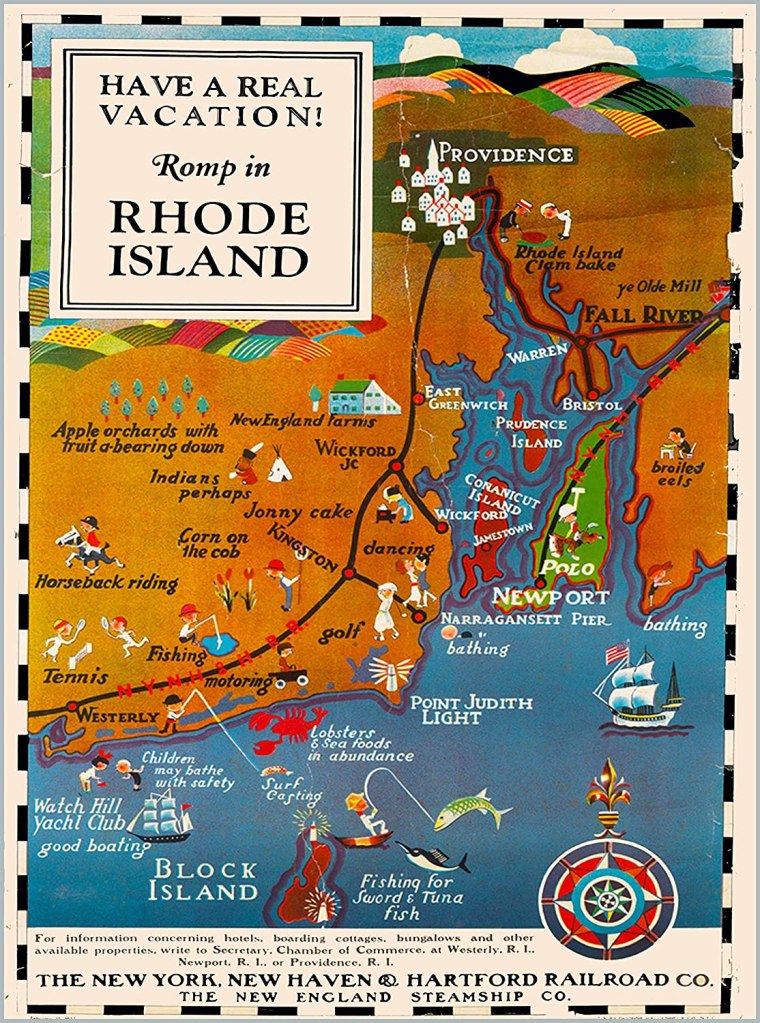
This beautiful poster map from 1925 is designed by the great early 20th century American cartoonist John Held, Jr., a regular contributor to The New Yorker, and Vanity Fair . Such a great depiction of Providence as the perfect vacation spot to explore Rhode Island and beyond.
This brilliant podcast by Gimlet Media features the tangled web of crime and corruption in old Providence 1956 to 1984.
A Mafia power struggle ensued in Boston and culminated with the rise of Raymond Patriarca's to boss of the New England crime family.
CHAPTER ONE: Divine Providence Welcome to Providence, Rhode Island, a city where organized crime corrupted every aspect of public life. In the first episode of Crimetown, a young prosecutor named Buddy Cianci takes on a gruesome murder case.
CHAPTER TWO: The wiseguys How does a kid from Providence become a mob enforcer? Two men share their personal stories of joining Raymond Patriarca’s crime family. As they move from their formative years on the street to maximum security, they come up against murder charges, jail…
CHAPTER THREE: The making of a mayor Buddy Cianci runs for mayor as the anti-corruption candidate, promising to change Providence. He’s a novice Republican politician in a city ruled by Democrats and mobbed-up unions. As he struggles to get elected, he faces an impossible choice…
CHAPTER FOUR: The bounded vault heist August 14, 1975. A ragtag crew of crooks holds up a fur company. But it’s not just a fur company. It’s the Patriarca crime family’s secret bank. And now, the thieves not only have to run from the law—they have to run for their lives.
CHAPTER FIVE: The art of a deal Buddy Cianci, the popular mayor of Providence, runs for governor. But he knows something the people of Rhode Island don’t. And when they discover Buddy’s secret, it threatens to derail his political career. So what does Buddy do? He picks a fight…
CHAPTER SIX: Gerald & Harold Police discover a bullet-riddled body in the backseat of a car. Jerry Tillinghast and his brother Harold are arrested. But doubts are soon raised about Harold’s involvement. And now, Jerry has a choice: break the mob’s code of silence, or …
CHAPTER SEVEN: Power Street March 20th, 1983. As an FBI investigation swirls around him, an increasingly unpredictable and paranoid Buddy Cianci summons a few friends to his home on the East Side of Providence. What happens there that night shocks the city.
CHAPTER EIGHT: Cat and mouse A master thief keeps getting away with big heists. A cop spends years tailing him, tapping his phone, and practically moving in across the street. Their epic tug-of-war will revolutionize the fight against organized crime.
CHAPTER NINE: A deal with the devil One night in 1982, a 20-year-old man is senselessly murdered at an abandoned gas station. A mobster is taken into witness protection after he pins the murder on his boss. This brutal crime will push three wiseguys out of the mafia in very different way…
CHAPTER TEN: The ghost After a lucrative career as a thief, Charles Kennedy has an important realization: the real money is in drugs. He rises to become one of the East Coast’s biggest traffickers, throwing coke-fuelled parties and amassing a strange menagerie of pets.
CHAPTER ELEVEN: The Doctor broad A young doctor suddenly finds herself caring for a sickly old man named Raymond Patriarca. As she grows closer to her new patient, she’s drawn into the underworld in more ways than 1.
CHAPTER TWELVE: Mob justice A mob lawyer rises to become Chief Justice of the Rhode Island Supreme Court. He promises to leave his past associations behind. But it’s hard to part with old friends.
CHAPTER THIRTEEN: The network A shadowy group of political insiders tries to cover up a crisis. A mobbed-up banker vanishes after embezzling millions of dollars. And one renegade ex-nun saw the whole thing coming.
CHAPTER FOURTEEN: Renaissance man Buddy Cianci left City Hall in disgrace after torturing a man in his living room. Now, he attempts the impossible: running for mayor of Providence again.
CHAPTER FIFTEEN: Family ties Charles “the Ghost” Kennedy and his sister Gloria took very different paths in life. She became a state senator. He became a drug smuggler. And as his empire starts to crumble, the people close to him suffer the consequences.
CHAPTER SIXTEEN: Operation Plunder Dome Dennis Aiken is an FBI agent from Mississippi. Anthony Freitas is a businessman from Portugal. Together, they’re Providence’s best hope in the war on corruption—and they just might take down Buddy Cianci once and for all.
CHAPTER SEVENTEEN: The trial of Buddy Cianci Buddy Cianci faces justice. His lawyers say he’s the Renaissance Mayor, too busy rebuilding Providence to notice a few bad apples in his administration. The prosecution says he’s just another crooked politician, running a massive corruption ring out of…
CHAPTER EIGHTEEN: The prince of Providence Buddy Cianci was once a crusading prosecutor who took on the mob. Now, he’s behind bars. For the mayor of any other city, this would be the end of the road. But Buddy isn’t any other mayor. And Providence isn’t any other city.
Cole Farmhouse is located within a short distance to many attractions. The list below provides details to our favorite spots.
Blackstone Boulevard – Almost two miles of tree-coddled trails. Run, stroll or bike. Only steps away from the Farmhouse.
Lippitt Memorial Park – Located at the tip of Blackstone Boulevard near the Providence/Pawtucket line. Farmers Market every Saturday, May through October from 9am to 1pm http://www.hopestreetmarket.com/
Blackstone Park Conservation District – This 45-acre natural woodland contains two ponds: York Pond and Hockey Pond, and some open meadow. The Blackstone Parks Conservancy is dedicated to the preservation and stewardship of historic Blackstone Park Conservation District and Blackstone Boulevard. This beautiful area is a short 15 minutes walk from Cole Farmhouse.
Rhode Island State House – Rhode Island was per capita the wealthiest state in the country when built, between 1895 and 1904. The beautiful marble dome is the fourth largest structural-stone dome in the world. The inside, beautifully preserved in its original condition, is a marvelous spatial experience. Tours are available Monday-Friday at 10 am and 1 pm.
RISD Museum – The RISD museum is open to the public on Tuesday, Wednesday, Friday, Saturday, Sunday 10am – 5pm. And on Thursday 12noon – 8pm. The museum is closed on June 19th, July 4th, Thanksgiving Day, Christmas Eve, Christmas Day, New Year’s Eve, and New Year’s Day. Admission is free on Sundays 10am – 5pm and Thursday evenings from 5 – 8pm.
Prospect Terrace Park – Located in College Hill (near Brown University), the statue of Roger Williams (Providence’s founder) looms over the city. Stunning view of Providence downtown.
Waterplace Park – On WaterFire evenings, downtown Providence is transformed by eighty-six anchored burning braziers that float just above the surface of the rivers that flow through Waterplace Park at the middle of downtown Providence. The public is invited to come and walk the riverfront and enjoy the beauty of the flickering firelight, the fragrant scent of aromatic wood smoke, and the music from around the world.See schedule and details at: https://usa1731.com/waterfire/
The Providence Athenæum – An independent, member-supported subscription library. The Athenæum opened the doors of its completed Benefit Street home on July 11, 1838, accompanied by the Franklin Society, a scientific and philosophic club, which occupied what is now the Reading Room. Over its nearly 200 years of existence, the library has welcomed illustrious writers, spirited thinkers, and energetic community members through its doors to engage in reading, conversation, and debate. At its heart, the Athenæum encourages a love of reading and learning to all. The building is open to the public, but only members can check out items from the collection
John Brown House Museum – The first mansion built in Providence located at 52 Power Street on College Hill . The house is named after the original owner, a benefactor of Brown University, merchant, statesman, and slave trader John Brown. John Quincy Adams considered it “the most magnificent and elegant private mansion that I have ever seen on this continent.”
Old Slater Mill – A National Historical Landmark signifying the birthplace of the American Industrial Revolution. Originally constructed in 1793, in this mill Samuel Slater first successfully implemented the first water-powered cotton spinning technology in America. Slater Mill is the beginning of everything from machine made goods and hourly wages, to planned communities and labor unions. Park schedule changes by season — see: https://www.nps.gov/places/slater-mill.htm
Roger Williams Park Zoo – One of the oldest zoos in the country. Located amid 40 acres of beautiful woodlands, the Roger Williams Park Zoo provides visitors the opportunity to see animals from all over the globe – some more than a million years old. Don’t miss the Jack-O-Lantern Spectacular at Roger Williams Park Zoo in October.
-Click here to download a walking tour map for Providence East Side (PDF Courtesy of goprovidence.com) -Click here to download a walking tour map for Providence Downtown (PDF Courtesy of goprovidence.com) –For hiking recommendations around Cole Farm visit our page: https://usa1731.com/hike/
Providence is one of the nation’s hottest culinary destinations. Some of our guests favorites are listed here.
Waterman Grille – A vibrant culinary experience. Great atmosphere is situated along the Seekonk River in a former bridge gatehouse that dates back to 1871. (Open for Indoor and Patio dining & takeaway)
Oberlin – Well-known for seafood, hand-crafted pasta and just-caught local fish. Excellent brunch! 266 Westminster Street, Providence, Rhode Island 02903 | (401) 588-8755
Ellie’s – Inspired by the Parisian way of life. Rich dining from breakfast to dinner, coffee to cocktails (Open for Indoor and Patio dining & takeaway)
CAV – Serving bistro menu al fresco, as well as the the chef menu. Award winning cuisine and ambiance, Open for Saturday and Sunday brunch, lunch and dinner daily 14 Imperial Place, Providence, RI 02903 | (401)-751-9164 (Open for Indoor and Patio dining & takeaway)
Garden Grille – Great Vegetarian and vegan options at a relatively low price. (Open for Indoor and Patio dining & takeaway)
Plant City – Vegan food hall and market that brings together different restaurant concepts under one roof: Italian food, Mexican food, fast-casual burgers, cafe style acai bowls, juices, smoothies, and desserts. (Open for Indoor and Patio dining & takeaway)
East Side Pockets – The best Falafel in Providence and beyond! 278 Thayer St., Providence, RI 02906 | Phone: 401-453-1100 (Open for Indoor and Patio dining & takeaway)
Gracie‘s – Best restaurant for a romantic night out! 194 Washington St., Providence, RI 02903 | (401) 272-7811 Check website for hours
Pizzico Oyster Bar – Great Italian cuisine on Hope St. 762 Hope Street, Providence, RI 02906 | 401 421-4114
Red Stripe – A traditional brasserie in Wayland square serving comfort food with a French influence. Lively atmosphere with classic American bistro fare (Open for Indoor and Patio dining & takeaway)
Haruki East – If sushi is what you’re into and you don’t want to spend a fortune head over to Haurki East in Wayland square. 172 Wayland Ave., Providence, RI 02906 | (401) 223-0332 (Open for Indoor and Patio dining & takeaway)
Pasta Beach – Great brick-oven Pizza and Italian spaghetti. A bit pricey but worth it. 195 Wayland Ave, Providence, RI 02906 | 401.270.0740 (Open for Indoor and Patio dining & takeaway)
Lim’s – Fine Thai & Sushi Restaurant in Wayland Square. 18 South Angell Street,Providence, RI 02906 |(401) 383-8830 (Open for Indoor dining & takeaway)
Dolores – Authentic dishes from Oaxaca and Puebla regions in Mexico. 100 Hope St. Providence, RI, 02906 | (401) 409-2075 (Open for Indoor and small outdoor dining & takeaway)
Dune Brothers – Awesome fish & chips. Local food from the water and earth of New England. A beach-style seafood shack in downtown PVD. Dune Brothers may be closed in winter months. 239 Dyer St. Providence, RI | 401-480-1269
Bakeries
Seven Stars Bakery – Excellent bakery with several locations in Providence. Delicious pastries and bread selection. My favorite bread is the walnut raisin. You can order a full loaf, half or a single slice. Also serving pastries, sandwiches, salads, and locally roasted coffee. (Open for Indoor and Patio dining & takeaway)
Wildflour – Vegan bakery with smoothies. Gluten-many free . Healthy & delicious smoothies. Try a shot or two of wheat grass to boost your immune system. (Open for Indoor and Patio dining & takeaway)
Drinks & Nightlife
Hope Street Pizza – A neighborhood Pizza and beer. Nothing fancy. Open late. 772 Hope St, Providence, RI 02906 | (401) 273-5955 (Open for Indoor and Patio dining & takeaway)
McBride’s Pub – Friendly neighbourhood Irish pub. Great menu. 161 Wayland Ave Providence, RI 02906 |(401) 751-3000 (Open for Indoor and Patio dining & takeaway)
Trinity Beer Garden – Trinity Brewhouse’s outdoor beer garden is located in downtown Providence. In addition to your favorite Trinity Beer, Trinity Beer Garden offers wine, other selected beer options, batched cocktails, and a rotating variety of local food vendors and food trucks. 2 Kennedy Plaza, Biltmore Park, Providence, RI 02903 | (401) 536-0640 (Open for Indoor and Patio dining & takeaway)
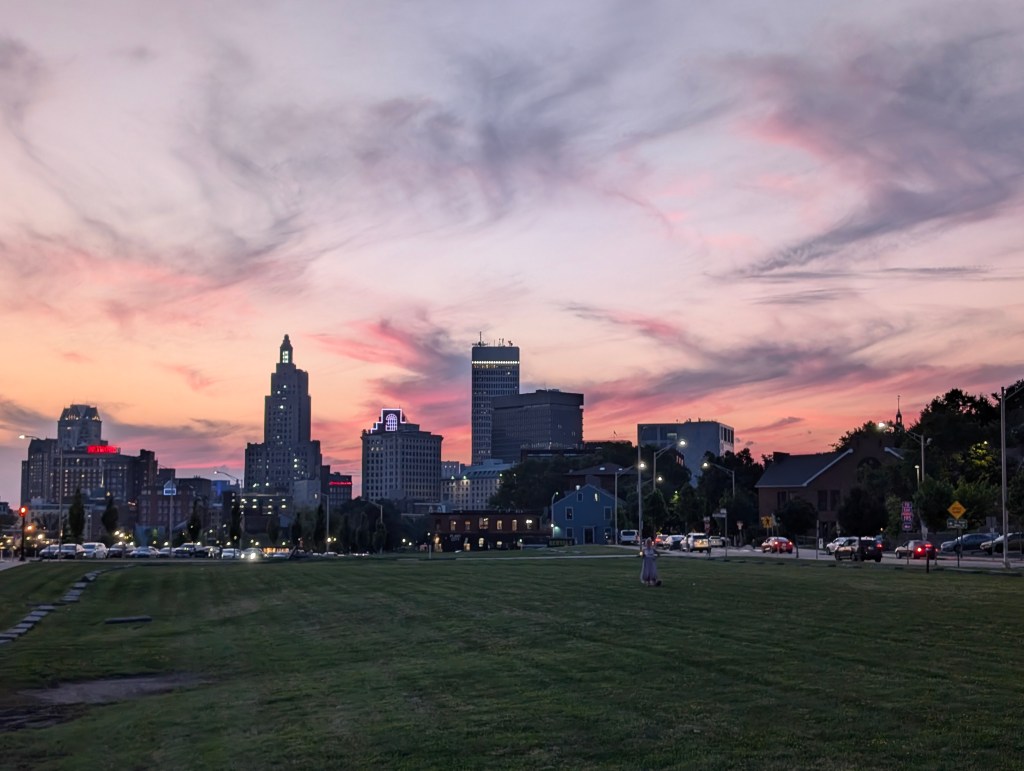
Providence, the capital city of Rhode Island, is one of the oldest cities in the United States, with a rich history dating back to its founding in 1636 by Roger Williams. Williams, a Puritan theologian, established Providence as a haven for religious freedom and separation of church and state, principles that were revolutionary at the time.
Home to Brown University, Rhode Island School of Design, and Johnson & Wales University, its vibrant art, cultural, and culinary scenes collide, casting an eclectic mix of contrast and creativity.
Providence is easy to get to and still affordable. Providence has a lot to offer: cool music, public art, great museums, award-winning theater, local events, and festivals.
Historical Significance
Providence played a crucial role in the early history of the United States. It was one of the original Thirteen Colonies and became a significant center for trade and commerce. The city’s strategic location along the Providence River facilitated its growth as a bustling port. During the American Revolution, Providence was a hotbed of revolutionary activity, contributing to the fight for independence.
Architectural Heritage
One of the most striking features of Providence is its well-preserved architectural heritage. Benefit Street, often referred to as the “Mile of History,” is a prime example. This street is lined with Colonial and Victorian-era buildings, showcasing the city’s long and proud history. Notable structures include the John Brown House, a grand Georgian-style mansion built in 1788, and the he Providence Athenæum , a Greek Revival-style building, constructed in 1844.
Cultural and Educational Hub
Providence is also known for its vibrant cultural scene and educational institutions. The city is home to Brown University, an Ivy League institution founded in 1764, and the Rhode Island School of Design (RISD), one of the leading art and design schools in the country. These institutions contribute to the city’s dynamic atmosphere, attracting students, artists, and scholars from around the world.
Rhode Island State House
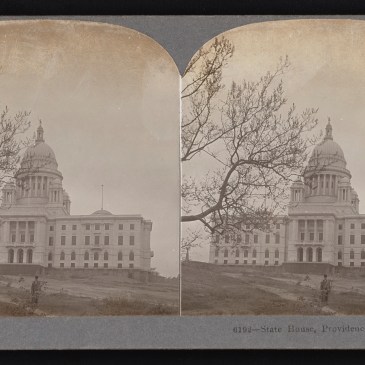
The State House is considered an outstanding example of American Renaissance architecture. Dominated by the fourth largest self-supported marble dome in the world, this is the center of Rhode Island government. Standing on top of the dome is the “Independent Man”, grasping a spear in one hand and resting the other on the stock of an anchor. The inside, beautifully preserved in its original condition, is a marvelous spatial experience. Visitors can take self-guided tours.
Today, Providence is a thriving city that blends its historical charm with modern amenities. The revitalization of its downtown area has brought new life to the city, with a variety of restaurants, shops, and entertainment venues. WaterFire, an art installation that involves lighting bonfires on the rivers of downtown Providence, has become a popular event, drawing visitors from near and far.In conclusion, Providence, Rhode Island, is a city that beautifully marries its rich historical past with a vibrant present. Its architectural treasures, cultural institutions, and dynamic community make it a unique and fascinating place to explore.
Vacation Hub
Providence is an ideal vacation spot for exploring the attractions of southern New England. You can reach Newport, Cape Cod, Boston, Westerly, Block Island, and many other attractions within an hour’s drive. See our post: Vacation Gateway
Rhode Island Landscapes: the Eden of America
Rhode Island, the Ocean State, is known for its natural beauty and historic charm. Jedidiah Morse, the 18th century geographer, describes Rhode Island as: “the Eden of America” — See our post: Eden of America: Rhode Island Landscapes


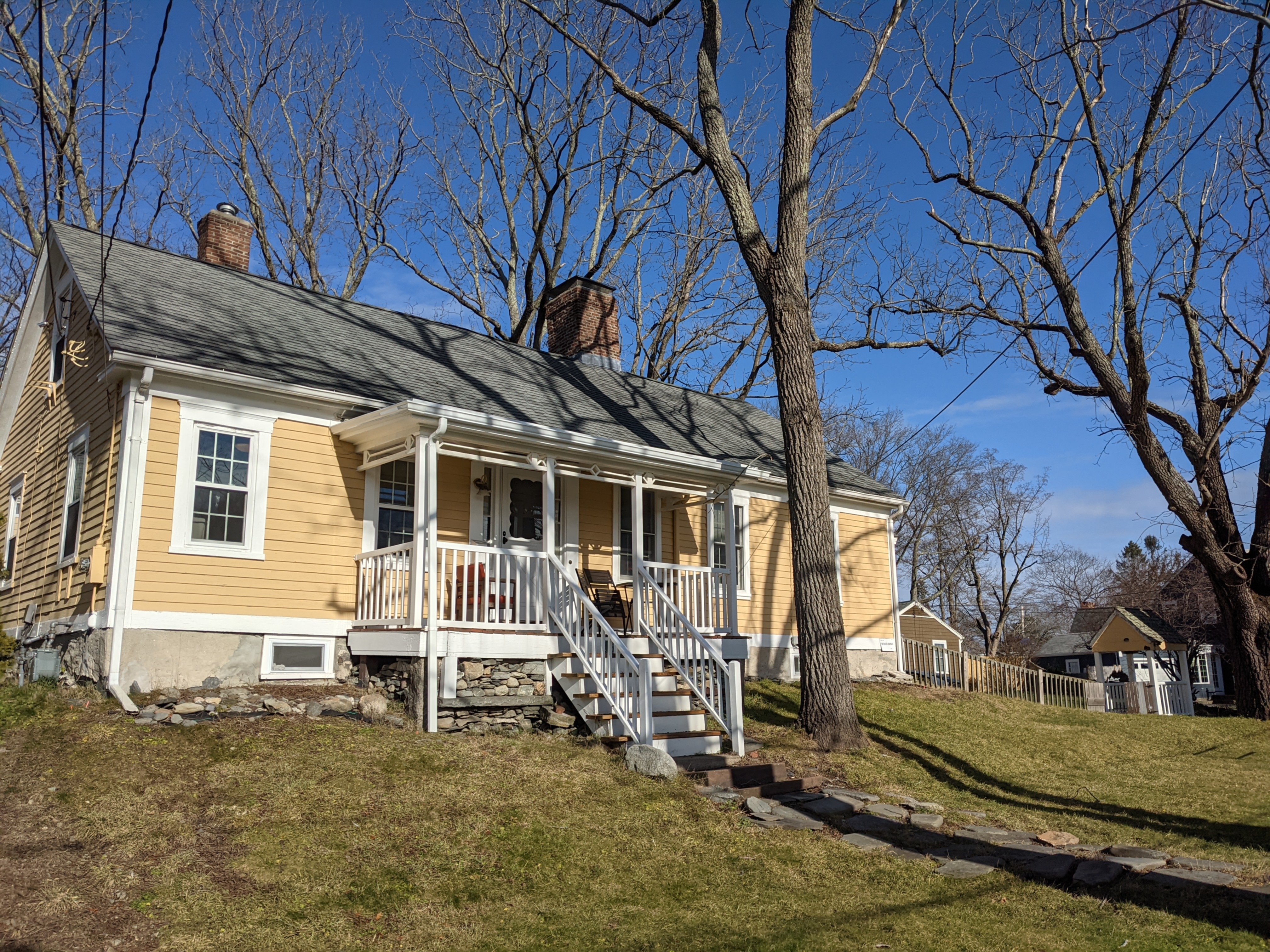
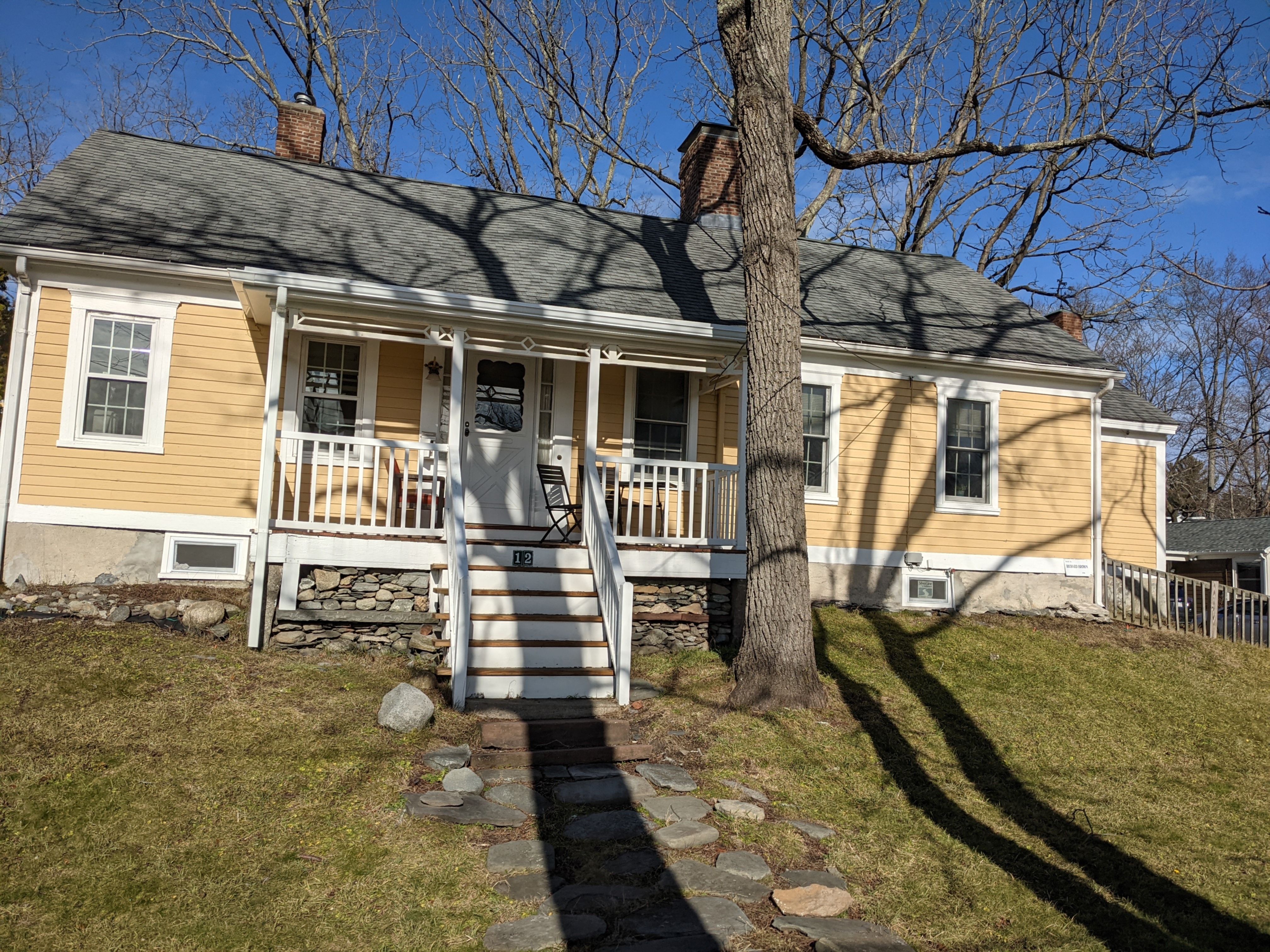
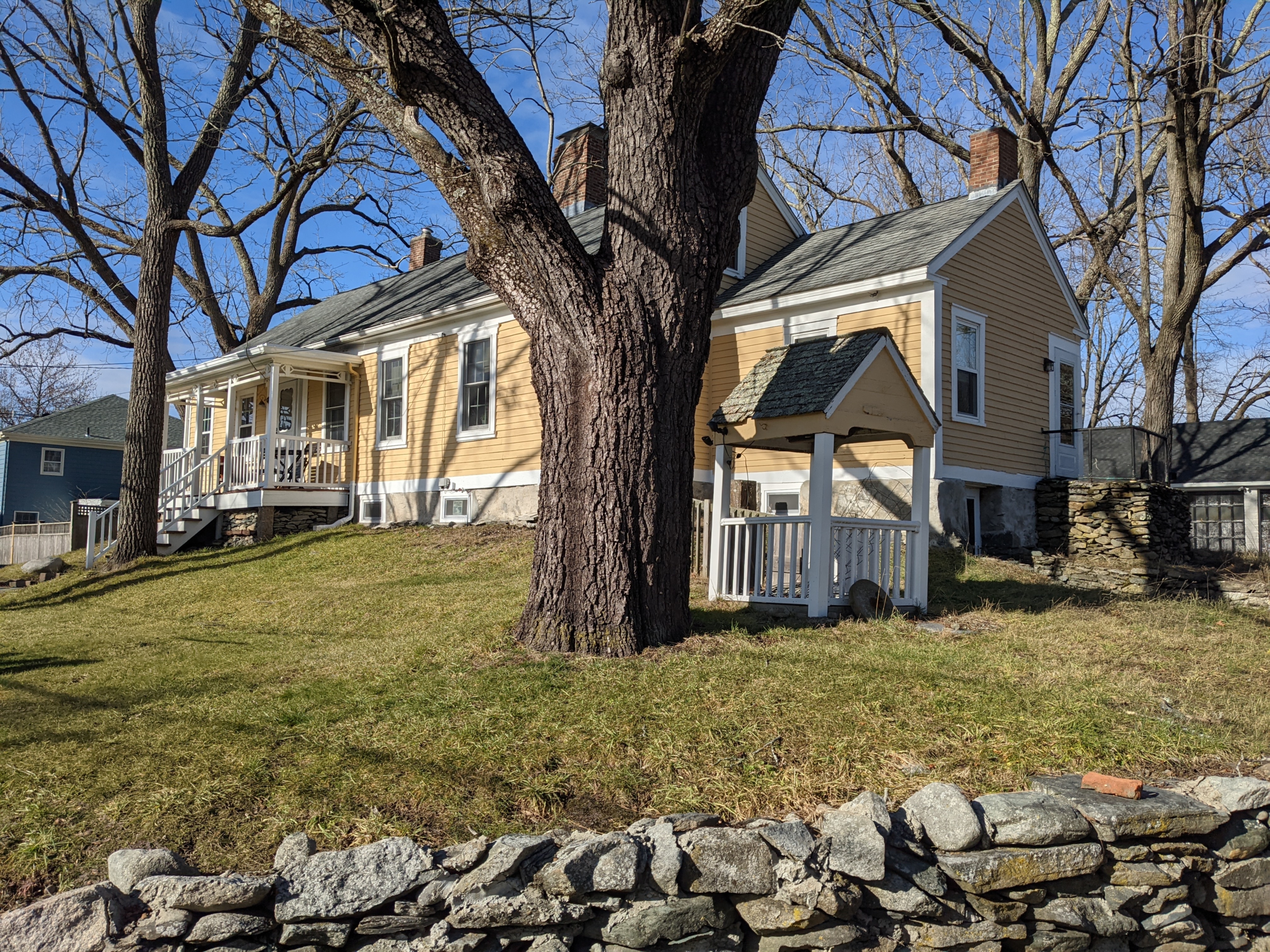

 The historic Cole Farmhouse
You must be logged in to post a comment.